– Stay in a 4-star hotel
– Hotel with Swimming Pool, Sauna, Gym & Wellness Center
– Fado Show (popular music of Portugal)
– Typical dinners in the most traditional restaurants of Porto
– 1 lesson a day with Fernando Serrano and Silvia Colli
– Walk through the city
– Panoramic trip by cable car to get to know the city from above
– Visit and tasting of the Port to the wine cellars
– Visit to the most beautiful bookshop in the world
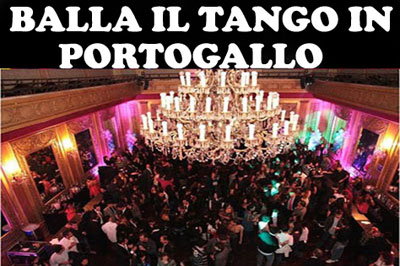
– Free entrance to local milongas
– Possibility to change dates according to your needs
EXTRA PROPOSAL:
– Walk by bike to the city
– Boat trip on the Rio Douro

PARTICIPATION FEE
(per person in double room)
3 days / 2 nights 290
4 days / 3 nights 390
For more information and registration:

http://www.tangoallegria.it/?pagina=form_iscrizione.php&v=FADO18
Info e Prenotazioni: +39.333 5300844
info@tangoallegria.it
CLICK I like on our Facebook page and receive all the News, Promotions and information about upcoming events
Book Now your next Tango Holiday and join us in our next adventure …

10 things to see in Porto
Porto is the second most populous city in Portugal, it is, in fact, the center of the northern region of the country.
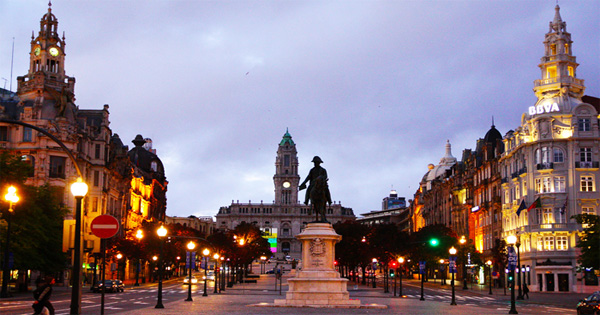
Overlooking the Douro River, Porto will surprise you with its particular and suggestive atmospheres.
1. The original Ribeira district
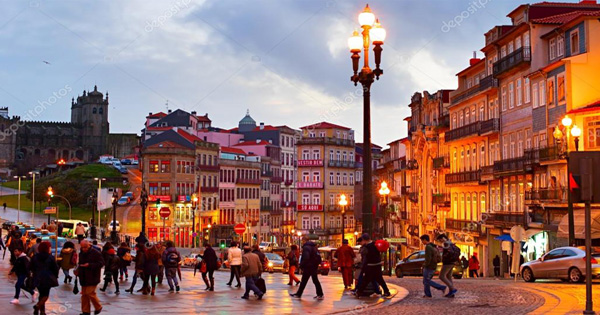
The most characteristic place of Porto? The Ribeira district, whose origins date back to the Roman Empire, the guardian of most of the attractions, to be admired for its characteristic streets and recognized World Heritage Site by UNESCO.
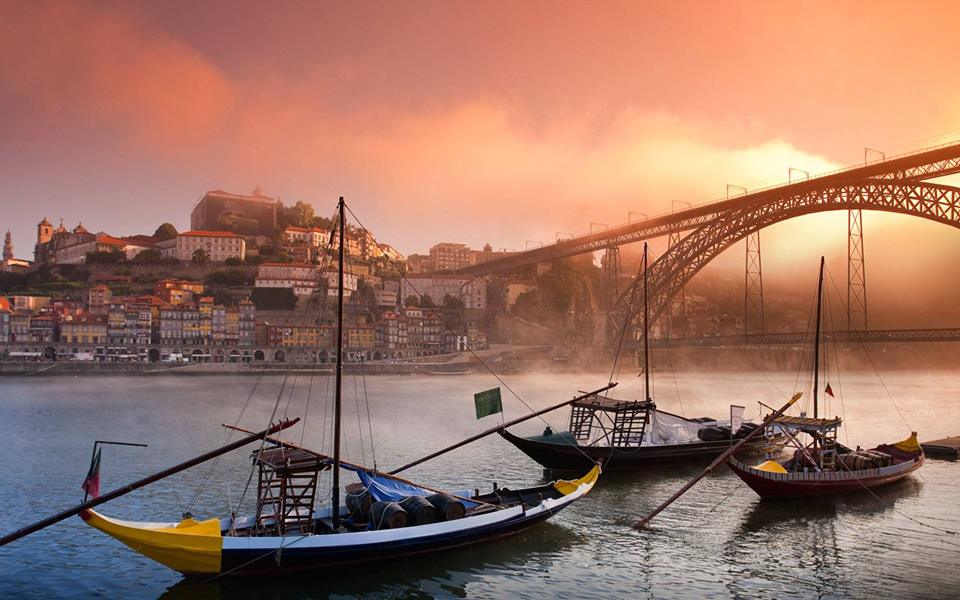
The Ribeira district will charm you with its narrow and pebbly narrow streets, steep climbs, the pretty and centuries-old houses painted in white or pastel colors, the banks of the Douro river on which the neighborhood faces and where the Barcos rabelos are moored, typical Portuguese boats designed for the first time centuries ago that host the barrels for the transport of wine from the cellars in which it is produced at the warehouses of the town of Vila Nova de Gaia.
The Douno is crossed by the bridge Don Luigi I, built on two floors and built-in iron on a design by Gustave Eiffel, the designer of the homonymous and famous tower of Paris!
On the enchanting riverside, teeming with bars, clubs, pubs, and restaurants, you can also taste the good Portuguese cuisine and its typical dishes: tripe, cod and franchising, a toast invented in the sixties.
2. Palacio da Bolsa
Externally unattractive, the Palacio da Bolsa (the full name is Palácio da Associação Comercial do Porto) hides all its charm inside, with the magnificent decorations resulting from the creative inspiration of stylistically very different artists.
Built in the nineteenth century, the Palace stands next to the Church of San Francesco, in place of what was once the convent of San Francesco, destroyed by fire in 1832, during the Portuguese civil war. In 1841 Queen Mary II decided to donate the ruins of the convent to the merchants of the city, who built the palace there and established the headquarters of the merchants’ association.
The work of the palace began in 1842 and the construction of the exterior finished in 1850, while the interior decorations were completed in 1910 and saw the involvement of numerous artists.
All the rooms of the building are very beautiful, but those not to be missed are the Sala Araba, in neo-Moorish style, and the Sala delleNazioni, surmounted by an iron dome placed at 19 meters high, from which the natural light that illuminates the room, creating a particularly evocative atmosphere. All around the dome are the national crests of the countries with which Portugal entertained commercial and diplomatic ties.
3. The Church of San Francesco
Probably the most beautiful example of Portuguese baroque and, in particular, of the technique of the talha dourada, the typical golden wood inlay with which many churches built in Portugal during the 1700s have been decorated.
Opulent and majestic, the Church of San Francesco has been adorned with more than 100 kilos of gold which, lit by natural light coming from the windows, give life to a magical and exciting effect. You will also be amazed by the precious wood inlays with floral motifs and animals that enrich the decorations.
4. The Cathedral of Porto
In Romanesque style, the Porto Cathedral was built in the twelfth century and remodeled between the seventeenth and eighteenth centuries.
Austere and severe, the Self is characterized by its large central rose window and the two side twin towers surmounted by domes. The three simple internal naves are embellished with baroque chapels and the Gothic cloister is fabulously decorated with azulejos white and blue, or particularly thick ceramic tiles, glazed and decorated.
In front of the Cathedral, in the square that offers a splendid view of the Ribeira, your curiosity will be attracted by a column in Manueline style that rises right in the middle of this. It is an ancient pillory: it is here that in the past the condemned were tortured and exposed to public derision.
5. The Mercado do Bolhão
Do you want to immerse yourself in the folklore and traditions of Porto? Then you have to give yourself a ride to the Mercado doBolhão, built with a neoclassical iron structure that rises on two floors. Although today is neglected and in decline, it is still the most famous market of Porto, full of stalls of fruit, vegetables, fish, meats, cheeses and trattorias.
6. Dom Luis I Bridge
Designed by Téophile Seyrig, a pupil of Gustave Eiffel, the iron bridge connects the Ribeira district with Vila Nova de Gaia, a twin town with Porto. Built-in 1881 and opened in 1886 and over 170 meters long, the Dom Luis I Bridge will surprise you with its unique and suggestive atmospheres, particularly exciting at sunset or at night, thanks to the romantic lights that illuminate it.
7. Libreria Lello and Irmão
Also known with the names of Chardon Library or, more simply, Libreria Lello, it is a jewel admired with wonder by the many tourists who visit it.
Founded in 1869 and built to a design by the Portuguese engineer Francisco Xavier Esteves, the enchanting Library Lello and Irmão combines the Gothic and Liberty styles in an incredible atmosphere. The inlays in the wood and the original staircase (also in wood) in the form of 8 with double convolutions contribute to enriching the structure, in which some scenes of the Harry Potter saga have been shot.
8. Torre dos Clérigos
Symbol of the Portuguese city, the Torre dei Chierici is built in stone and is 76 meters high. Inside it houses a spiral staircase consisting of 225 steps.
Designed by the Italian architect Niccolò Nasoni, the Torre del Chierici was built between 1754 and 1763 according to the dictates of the Baroque style.
9. Centro Portugues de Fotografia
Fascinating for anyone, not just for photography enthusiasts. Inside the Centro Portugues de Fotografia you will live an exciting journey to discover vintage cameras.
10. The Porto station
Porto Station is one of the most popular and visited tourist attractions in the Portuguese town. At the beginning of the twentieth centurythe beautiful atrium that leads to the tracks was decorated with 20,000 azulejos painted in white and blue by Jorge Colaco, the best known Portuguese decorator. A show to be admired!